
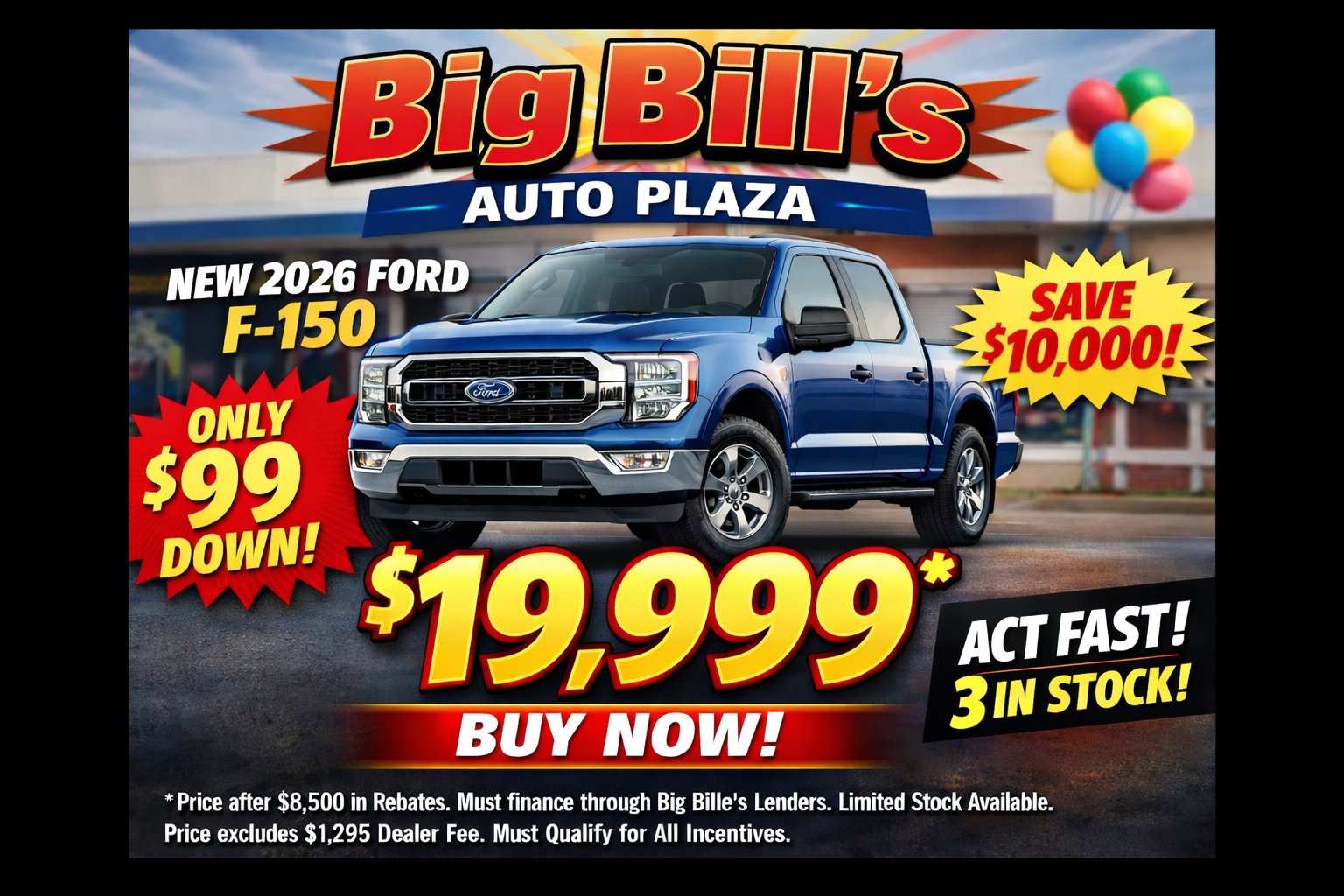
A Reminder That Transparency Is No Longer Optional
The Federal Trade Commission delivered a pointed message to the auto retail industry this week: price advertising must be clear, complete, and available to every consumer who walks through the door.
On March 13, the FTC confirmed it had sent warning letters to 97 auto dealership groups across the United States, advising them that their advertising practices may violate federal law. The letters focus on a problem that has plagued car buyers for decades—advertised prices that appear attractive but change dramatically once a consumer reaches the showroom or finance office.
The agency did not release the names of the dealerships involved, and FTC spokesperson Mitchell Katz said the reasons those groups were selected are “nonpublic information.” But the warning itself is unmistakable: dealers who advertise prices that exclude mandatory costs or rely on conditions not disclosed upfront could be violating the Federal Trade Commission Act, which prohibits deceptive or unfair business practices.
Christopher Mufarrige, director of the FTC’s Bureau of Consumer Protection, made the agency’s stance clear.
“The FTC is committed to preventing auto dealers from misleading consumers with low advertised prices and then adding mandatory fees at the end of the purchasing process,” Mufarrige said in a statement. “The FTC will remain focused on monitoring auto dealerships to ensure the market functions efficiently and competitors are transparently competing on price.”
For an industry built on competition and reputation, the message carries significant implications.
What the FTC Says Dealers Cannot Do
In its letter to dealership groups, the FTC emphasized a core rule:
The advertised price must include all mandatory fees.
The only charges that may legally be excluded from a vehicle’s advertised price are government-imposed costs, such as:
-
State sales tax
-
Registration fees
-
Title fees
Everything else—including dealer-added mandatory charges—must be included in the advertised price.
The FTC outlined six examples of advertising practices it considers illegal:
-
Advertising a price that does not reflect all required fees
-
Advertising a price that includes rebates or discounts not available to all consumers
-
Advertising a price that ignores required down payments
-
Conditioning the advertised price on the customer using dealer-arranged financing
-
Requiring consumers to purchase additional items not included in the advertised price
-
Advertising vehicles that are unavailable or do not exist
These practices are familiar to anyone who has shopped for a car and discovered the price advertised online was not the price available at the dealership.
The “Everyone Qualifies” Problem
One of the most common issues cited by regulators is advertising a price that assumes every customer qualifies for every rebate.
Many incentives are conditional. Examples include:
-
Military rebates
-
College graduate incentives
-
Loyalty rebates for existing brand owners
-
Conquest rebates requiring ownership of a competing brand
If an ad includes these rebates in the advertised price without clearly stating the conditions, the FTC considers that deceptive.
Even worse, some advertisements simply state phrases like:
“Must qualify for all rebates.”
In practical terms, almost no customer qualifies for every incentive simultaneously. When those rebates are removed in the finance office, the final transaction price rises—sometimes by thousands of dollars.
From the FTC’s perspective, this practice undermines price transparency and creates a misleading comparison for consumers shopping between dealerships.
Mandatory Add-Ons Under Scrutiny
Another area regulators are watching closely is dealer-installed products.
Examples include:
-
Paint protection packages
-
Nitrogen-filled tires
-
Window tint packages
-
VIN etching
-
“Protection” bundles
If a dealership requires the customer to purchase those products, the FTC says their cost must be included in the advertised price.
Advertising a vehicle at one price and then telling the consumer the vehicle includes mandatory add-ons that increase the price is exactly the type of conduct regulators are targeting.
Advertising Vehicles That Aren’t Actually Available
The FTC also warned dealers about advertising vehicles that cannot be purchased.
This includes situations where:
-
A vehicle has already been sold but remains in advertising
-
The dealership never had the vehicle in inventory
-
The vehicle is advertised only to attract traffic to the showroom
This tactic—sometimes referred to as bait advertising—is a clear violation of federal consumer protection rules.
Why the FTC Is Paying Attention Now
The FTC has been tightening its oversight of automotive retail practices in recent years. Vehicle purchases are one of the largest consumer transactions most households make, and complaints related to auto sales consistently rank among the top categories reported to regulators.
According to the agency, misleading pricing practices distort competition and make it harder for honest dealerships to compete.
When one dealer advertises a price that excludes thousands of dollars in mandatory costs, other dealers are pressured to follow the same tactic just to appear competitive online.
The result is an industry-wide race to the bottom in advertising transparency.
Compliance Experts Urge Dealers to Audit Their Ads
Tom Kline, lead consultant at dealership compliance firm Better Vantage Point, says dealerships should treat the FTC’s warning seriously.
He recommends dealers:
-
Review advertising with their marketing agencies
-
Conduct mystery shopping of their own stores
-
Monitor customer complaints for patterns
-
Ensure insurance policies cover regulatory investigations
“There are plenty of ways to protect yourself,” Kline said. “But you have to be proactive and willing to do the work.”
NADA Responds
The National Automobile Dealers Association acknowledged the FTC’s concerns and indicated it plans to work with the agency.
In a statement released March 13, the organization noted that while most dealerships operate responsibly, advertising compliance remains critical.
“While the overwhelming majority of America’s 17,000+ dealers service their customers in a consumer-friendly and compliant manner, NADA takes any potential advertising violations in the marketplace very seriously,” the group said.
An Industry Journalist’s Perspective
From a consumer standpoint, the FTC’s message is straightforward: the price a shopper sees should resemble the price they pay.
From a dealer’s standpoint, the issue is more complicated.
Automotive advertising exists in one of the most competitive retail environments in the country. Dealers selling identical vehicles often compete within a few miles of each other, and digital marketplaces sort inventory primarily by price.
That pressure has historically pushed advertising toward the lowest possible number—even when that number depends on fine print.
The problem is that short-term advertising advantage creates long-term trust problems.
Consumers increasingly share their experiences on review sites like Google, DealerRater, Cars.com, and Yelp. When buyers feel misled about pricing, those experiences often become public—and permanent.
Dealers who advertise transparent pricing frequently discover something interesting: their closing rates improve.
Customers arrive with realistic expectations, negotiations are shorter, and trust is easier to establish.
The FTC’s latest warning may accelerate a shift that was already underway in many parts of the industry: moving from “price bait” advertising to clear, honest, competitive pricing.
In the long run, that approach is likely to benefit both consumers and dealers who are trying to build lasting reputations in their markets.